PAACs
Building meaningful Communication with Personal Symbols
Personal AAC Symbols (PAACs) are a new way to express meaning and intention through a simple set that feels unique but familiar.
Straight from the library
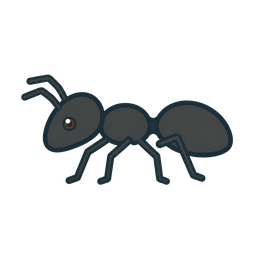
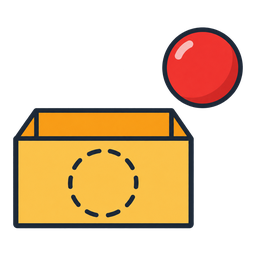
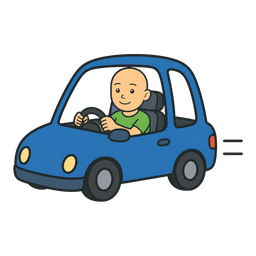
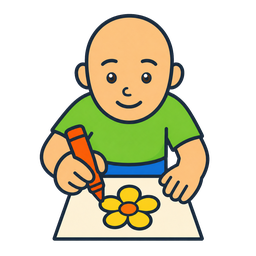
688 symbols, drawn as one set.
Ten of them to start with. Every card wears its Fitzgerald colour, the same one the app paints behind it. Keep scrolling and the other 678 arrive and take their places around them.




The question
Does a symbol work better
when it is yours?
Our expectation is that a personalised symbol may be recognised faster, remembered longer and liked more than a generic one. That is a hypothesis, not a finding. Nobody has measured it here yet, and we intend to measure it properly before we claim it.
Until then, nothing on this page should be read as evidence that personalised symbols teach better. What follows is what has been built.
What ships today
The PAAC core symbol set.
A complete symbol library of 696 pictures, bundled inside SuperAAC and switched on by default. It is a general-purpose core set rather than a personalised one: the personalisation research is the part still under way. What makes it worth describing is not the drawings but everything recorded alongside them, because that is what an AAC app actually needs in order to be useful.
- What is in it
- 696 symbols: 522 words, 164 letters and the numbers 1 to 10. The letters cover three scripts — Latin including accented forms, Cyrillic and Greek — so a board is not limited to English spelling.
- Colour is not in the picture
- Each symbol names which Fitzgerald Key group it belongs to — people, actions, describing words, things and places, social words, question words, numbers, connecting words, letters — and the app paints the cell behind it. Keeping colour out of the artwork means a service that does not use colour coding can be given a switch later without redrawing anything.
- Search that survives real spelling
- Every symbol carries a pre-folded list of search terms: the word, its synonyms, its concept and its common inflections. It is why "broke" finds break, "helping" finds help, "was" finds be and "puppy" lands on dog. Those cases are pinned by tests against the shipping pack.
- Alt text that describes the picture
- All 696 carry a description of the drawing rather than a repeat of the word — for a screen-reader user, and for anyone choosing between two symbols that mean nearly the same thing. The entry for "dog" describes an adult dog in side view with floppy ears, a collar, an upturned wagging tail and an open mouth.
- Teaching metadata
- Each symbol records whether it is core or fringe vocabulary, a priority for building a starter board, and how much explaining the picture needs: transparent if it looks like the thing, translucent if it needs a little, opaque if it has to be taught outright.
- Two symbols, one word
- Where two tiles would otherwise read identically the set gives them distinct labels — break (snap) against break (rest), maybe (gesture) against maybe (answer) — so a board never shows the same word twice with no way to tell them apart.
In SuperAAC
On by default, and it does not
overrule a board you have made.
PAAC is one of two symbol libraries in SuperAAC; the other is Mulberry. Both are active on a new install and the picker searches across them. When you place a symbol, its Fitzgerald colour is applied only if the cell is still on the default background — if you have already coloured your board, the symbol picker leaves your choice alone.
Anyone who already had SuperAAC before the set arrived is switched on once, because their saved settings named only the library they had. Turning a set off is a real preference and it sticks; never having been offered one is not.
Where the project actually is
One set built.
The research still ahead.
The symbol set is finished and in people's hands. The personalisation pipeline — the part that would build symbols from a family's own photographs — is not written yet, and the field study that would test whether any of this helps has not been run. We would rather say that plainly here than let a research plan read like a result.